
Food Hunt Level 1031 Walkthrough
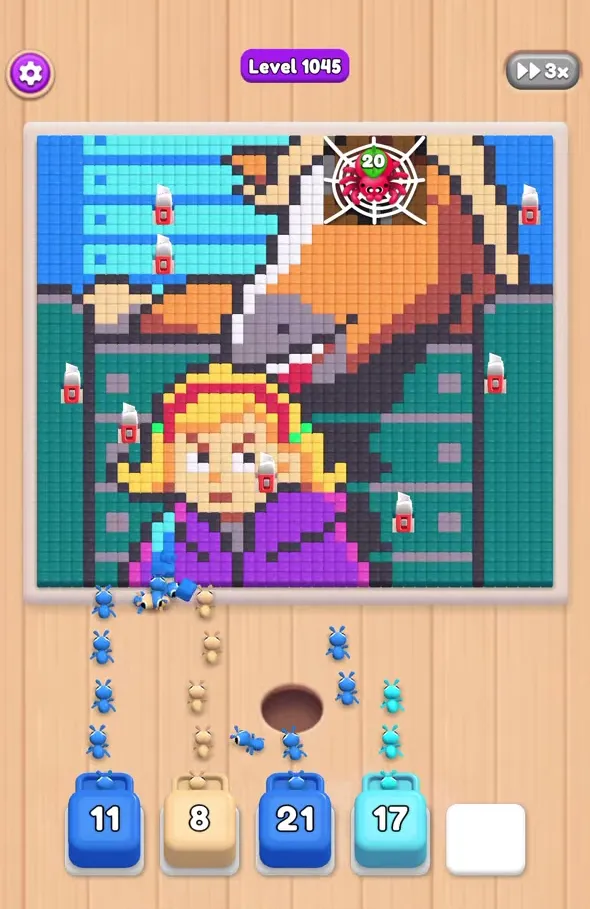
To beat Food Hunt level 1031, start dark grey as soon as the queue offers it, then use red and blue to expose the covered colors. The picture shows a mango wearing sunglasses on a counter, with large vertical lettering beside it. Work through its 10 colors, holding grey and orange for the later stages and dark teal for the finish.

Most white, grey, green and orange pixels are surrounded by other colors, so their boxes can sit without making progress. Grey and orange each have more than nine tenths of their pixels covered, while dark teal is completely enclosed. Wooden plaques marked with numbers hang over the picture, but their effect is not established in the level notes. Base your choices on the available queue and the exposed pixels rather than assuming what those plaques do.
| Picture | Mango in sunglasses on a counter beside large vertical lettering |
|---|---|
| Colors | 10 |
| Largest color | Dark grey, almost one quarter of the board |
| Slots | 5; preserve space for red and blue |
| Last color | Dark teal, enclosed by 6 other colors |
Mango Color Order: Dark Grey to Dark Teal
Dark grey first, then red and blue; yellow, white and green next; grey and orange toward the end; dark teal last.
Treat this route as a priority guide for the mango rather than a promise that every named color is immediately selectable. The bottom queue controls your taps. Choose the largest available color first, with dark grey taking priority at the opening, and use the red and blue options to open neighboring sections. Yellow belongs after that opening work, while white and green need more of their surroundings removed. A late grey or orange box has accessible pixels to eat that the same box would lack near the start.
Six-Stage Solution for the Sunglasses Mango
- Give dark grey the first opening. Send dark grey into a slot when it reaches the selectable part of the queue. Almost one quarter of this picture uses that color, a larger share than any of the other nine colors. Its ants have the biggest area to chew, so an early start lets that work happen alongside the shorter colors. Watch its number fall gradually as accessible pixels disappear; the broad dark grey areas will not vanish in a single quick pass.
Video walkthrough of level 1031
The level 1031 video accompanies the dark grey opening, the red and blue access work and the later covered colors. Use it to follow the mango clear through to dark teal.

- Use red to uncover the edges. Add red once dark grey is already working. A little more than seven tenths of red is surrounded, which still leaves some pixels available at the opening. The ants eat those exposed sections and uncover edges belonging to neighboring colors. Expect the remaining red to wait for its own neighbors rather than treating the first pause as a reason to fill another slot with a deeply covered color.
- Bring blue into the working group. Blue follows red and is one of the more accessible choices on this board. It removes available sections quickly and makes more yellow and white pixels reachable. Keep an eye on the blue counter as it approaches zero, because that finished box returns space to the queue. Use the newly cleared route to judge the next color instead of choosing a covered box simply because you can see its color in the mango.
- Stage yellow, white and green. Yellow has roughly three quarters of its pixels surrounded, white is almost entirely enclosed, and green is close to nine tenths covered. Introduce these colors individually after the earlier ants have removed some neighboring pixels. White needs visible opening work around it before it can contribute much. Hold green while the queue still offers a more productive choice, bringing it forward when those better options are no longer available.
- Release grey and orange late. Grey has more than nine tenths of its pixels blocked, and orange is almost completely enclosed. Putting either into the opening lineup produces a box with very little available work. Save this pair for the stage when much of the mango scene has already been eaten. Once their surroundings are gone, the remaining patches become reachable and their boxes can clear in succession instead of occupying slots through the early passes.
- Let dark teal close the board. Every dark teal pixel is surrounded by other colors. Those neighbors include dark grey, white and four additional colors, so the route into dark teal depends on several earlier passes. Leave its box until the other colors are nearly finished. A long wait from dark teal is consistent with this layout, but playing it at the end avoids committing a working slot to that wait while red and blue still need room.
When the Mango Queue Has No Working Space
Start by checking your five slots. Red and blue need room because they can make progress while the heavily enclosed colors wait. Filling three places with stalled boxes leaves little flexibility when the queue finally offers a color that would open the picture. As spaces return, introduce waiting colors separately so each new choice has a chance to benefit from the previous clear.
Next, compare the stalled color with its surroundings. White, grey and orange are more than nine tenths covered in the level notes, and dark teal has no initially exposed pixels at all. Yellow also waits on roughly three quarters of its area, while green approaches nine tenths. Their pauses follow the enclosure of this particular mango scene; keep removing neighboring colors instead of expecting a waiting box to gain access before those neighbors disappear.
Frequently Asked Questions
How do you beat Food Hunt level 1031?
Lead with dark grey, then bring red and blue into the available slots to open the mango picture. Work through the 10 colors with grey and orange late, and finish on fully enclosed dark teal.
Which color should I play first on level 1031?
Choose dark grey first when the queue makes it available. It covers almost one quarter of the board, so starting it early gives the largest of the 10 colors time to work while red and blue clear accessible sections.
Why does the dark teal box wait so long?
Dark teal is surrounded by 6 colors: dark grey, white and four others. None of its pixels can clear before the enclosing colors expose them, which is why it belongs at the end.
What if the slots fill with boxes that cannot move?
Keep white, grey, orange and green out of the early lineup while their neighbors remain. With 5 slots available, add only one waiting color at a time and preserve room for the more accessible red and blue.
Can I change the color order for the mango?
Your choices come from the queue, so the 10-color board is a guide to priorities rather than free selection. Pick the largest useful offered color, starting with dark grey, and delay enclosed options such as dark teal until the needed neighbors have cleared.
Read next



For more pictures, browse the Food Hunt levels list. The Food Hunt walkthrough page sums up the rules that apply to every level.