Food Hunt Level 861 Walkthrough
Beat Food Hunt level 861 by playing red first, then pink and orange before the covered colors. The picture is a dancing green frog wearing a yellow cap and a star-covered cape against a pink background, with 10 colors in the route. Keep yellow, blue and pale orange for the final stage because their pixels begin completely blocked by surrounding colors.

Seven of the 10 color boxes are partly or fully blocked, so the five slots can fill with ants that have nothing reachable to eat. Dark grey is almost entirely covered, white nearly as much, and green and dark red also need surrounding sections removed. Red is the largest accessible color, covering more than a fifth of the board, and its long working pass gives those hidden colors a chance to open.
| Picture | Green frog dancing in a yellow cap and star-covered cape against pink |
|---|---|
| Colors | 10 |
| Slots | 5 |
| Blocked color boxes | 7 of the 10 are partly or completely covered |
| Largest accessible color | Red: more than a fifth of the board |
| Completely blocked at first | Yellow, blue and pale orange |
Frog Color Order by Pixel Accessibility
Red first, then pink and orange; dark grey, white, green and dark red follow as their pixels open. Leave yellow, blue and pale orange until the end.
The bottom queue determines your taps. Green may precede white if already exposed. Yellow, blue and pale orange start fully covered; leave them queued until their neighbors disappear.
Solution for the Red Opening and Hidden Hat Colors
- Start the largest exposed color. Send red into a slot as soon as the bottom queue offers it. Red covers more than a fifth of the board and takes longer to empty than the other colors. Its ants begin on the reachable red pixels around the frog and background while that substantial counter keeps a place occupied. During the red pass, part of the cover above the hidden colors disappears, so let the other available colors work beside it rather than waiting for red to finish alone.
Video walkthrough of level 861
The frog video follows the large red opening, the accessible pink and orange passes, and the late reveal of yellow, blue and pale orange around the star-covered outfit.
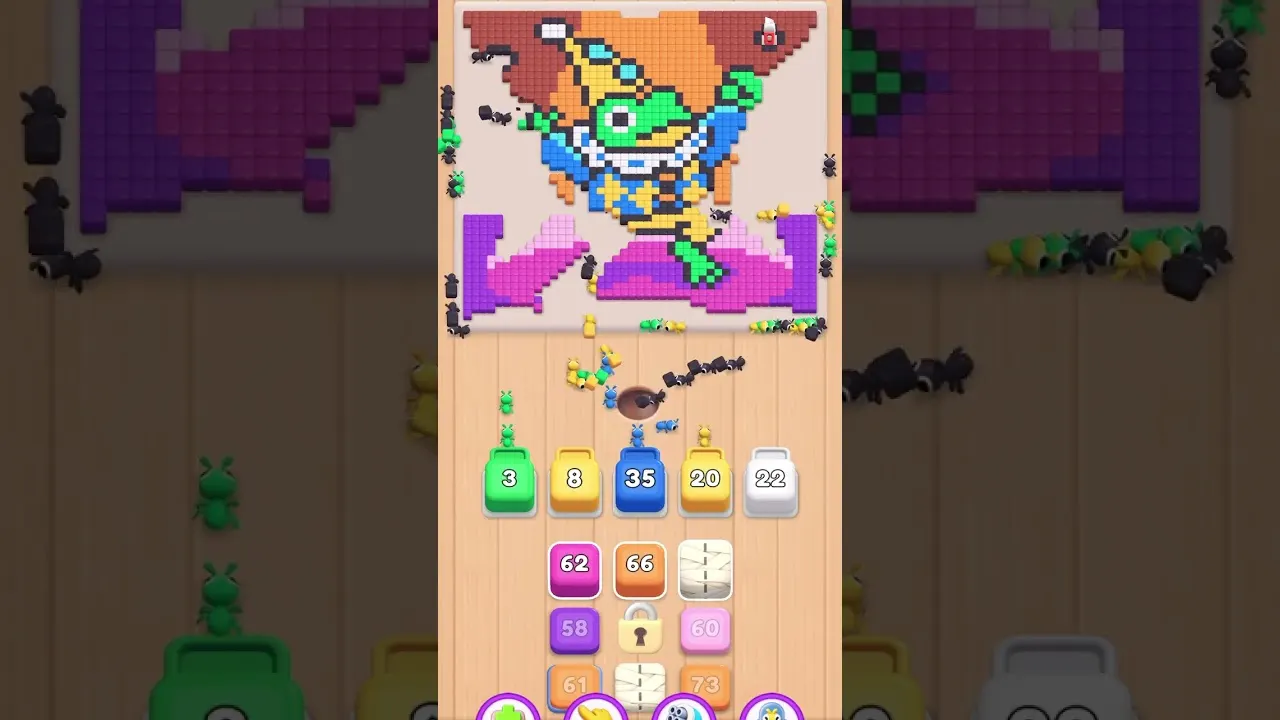
- Use pink and orange access. Place pink and orange after red because those sections are reachable from the beginning. Pink removes the background around the frog, while orange clears its accessible patches in the picture. These two colors do not face the same opening delay as the deeply covered groups. Their work opens approaches toward dark grey and white, so they belong before those almost-hidden colors even though the frog body may draw your eye first.
- Reveal dark grey and white. Once red, pink and orange have removed the upper covers, bring in dark grey when its pixels are visibly reachable. It is the most blocked of the partially covered colors and needs that opening before it can do useful work. White follows, also heavily enclosed and slow to become accessible. Together these passes remove the remaining surroundings and improve access to green and dark red, rather than jumping directly to the completely hidden yellow cap.
- Free the body colors. Green on the body is less heavily covered than dark grey and white, so it can enter before white if the green pixels have already become exposed. Dark red is more tightly blocked than green and needs more of its neighboring colors removed. Choose each of these two only when it has a visible route from above. Keep at least two slots available for the final colors while this body section clears; filling the row with the hidden ending too soon removes that flexibility.
- Save the fully hidden ending. Yellow on the cap, blue and pale orange begin completely enclosed by other colors. Put them into the slots last, after the earlier colors have been eaten and space is available. Yellow can still have a long delay, so its continued presence is expected while the ants reach the remaining cap pixels. The final pixel comes from one of these ending colors; the route does not identify a single fixed finishing color among the three.
- Read the queue below the frog. The queue sets which box you can tap; the picture shows whether its targets are reachable. If yellow or blue appears early but remains covered, leave it waiting. Choose an accessible color when the queue offers one and remove the outer layers. This preserves room for dark grey, white and the final hidden colors.
Why Yellow Waits After the Frog Starts Clearing
Yellow is one of the last colors to open, so a long wait on the cap can look like a stopped level. Blue and pale orange share that complete initial blockage. Dark grey and white are almost fully covered rather than completely hidden, but loading them before their routes appear can tie up places nearly as effectively. The five-slot row cannot keep accepting new colors once all of those waiting boxes have been placed.
Compare that late wait with the opening red pass before deciding what to pick next. One large working red box beside the accessible pink and orange is a useful middle arrangement. Keep the covered colors in the queue until the neighboring patches disappear, using the available places for dark grey and white when they actually open. If all places are already occupied, the waiting boxes can only finish as active ants expose their targets; there is no spare slot for the next accessible color.
Frequently Asked Questions
How do you beat Food Hunt level 861?
Send red first and follow pink and orange to uncover the frog. Work through the partly blocked dark grey, white, green and dark red when their pixels become reachable. Seven of the 10 colors need that preparation, with yellow, blue and pale orange reserved for the final stage.
Which color should start the dancing frog level?
Red goes first because it covers more than a fifth of the board and needs a long working pass. Pink and orange follow through the 5 available slots. Those accessible colors remove covers above dark grey and white while red continues eating.
Why does yellow wait so long on level 861?
Yellow starts fully covered, just like blue and pale orange, so its ants cannot reach the cap immediately. It is one of the 7 blocked colors and has the longest delay. Continue removing reachable neighboring colors rather than assuming the yellow wait means the frog has stopped clearing.
Which colors are the most blocked?
Of the 10 colors, yellow, blue and pale orange are completely enclosed at the start. Dark grey and white are almost fully covered, followed by dark red and green. Those seven need surrounding colors removed before they can use the slots effectively.
What if all five slots fill on level 861?
Covered yellow, blue or pale orange must wait until neighboring colors expose their pixels, and 5 occupied slots leave no room for another pick. Keep red, pink and orange working where possible. For the earlier body stage, preserve at least two places for the later colors instead of loading every hidden box at once.
Read next



Stuck somewhere else? Pick another number on the Food Hunt levels page, or start with the Food Hunt walkthrough basics if the slots and boxes still feel new.