Food Hunt Level 373 Walkthrough
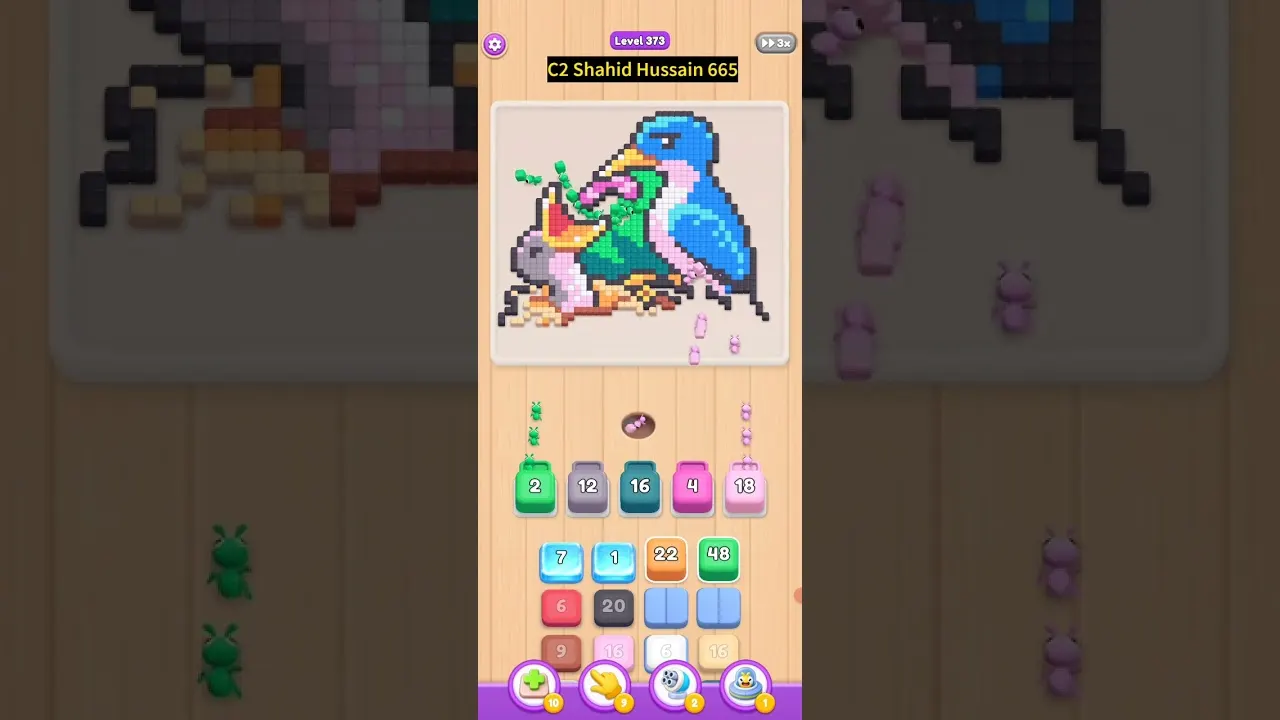
To clear Food Hunt level 373, begin with green, bring in dark grey after it, and use the accessible colors before touching the buried ones. A blue bird feeds its chick in a nest surrounded by green leaves, and its 12 colors need different amounts of opening work. Keep yellow, teal, pale orange, dark green and dark teal waiting until their neighboring pixels have been eaten.

Six colors have a substantial amount of blocked pixels, so choosing a box just because its color is visible can clog the slots. Yellow is the worst case: about nine tenths of its pixels cannot be reached at first. Pale orange and teal each have roughly four fifths hidden away. Green, meanwhile, covers almost a fifth of the board, making an early start worthwhile even though its box takes a while to finish.
| Picture | Blue bird feeding a chick in a nest among green leaves |
|---|---|
| Colors | 12 |
Bird and Nest Color Order
Green first, then dark grey and the other exposed colors, including blue, orange, white and dark pink. Delay yellow, teal, pale orange, dark green and dark teal until the surrounding colors are gone.
Use this sequence to choose among the boxes actually offered at the bottom. It describes which colors can work early and which depend on their neighbors, rather than giving a tap for every box. Green needs the longest head start because it contains the most pixels. Dark grey belongs next, once the leaves begin opening its approaches. Blue, orange, white and dark pink help keep space available between those larger jobs. The late group becomes useful as the bird and nest lose the colors enclosing it.
Walkthrough from Leaves to the Nest
- Give green the first slot. Choose green as your opening box instead of starting with a small detail on the bird. The leaves make green the largest color, with more matching cells than any other color in this picture. Its slot stays occupied until the ants eat every matching pixel, so beginning early lets it work alongside your later selections. You can then pay attention to the next offered colors while the green area gradually disappears.
Video walkthrough of level 373
The level 373 video follows the bird-and-nest clear from the large green opening toward the enclosed late colors. Use it to compare when yellow and the teal areas become reachable.
- Bring dark grey into reach. Dark grey is the second largest area, accounting for about a seventh of the board. More than half of its pixels are enclosed, which makes access as important as its size. Introduce its box after green has begun clearing the way toward those grey sections. Starting the two colors in this order gives dark grey a route to work on without treating all of its hidden pixels as immediately available.
- Cycle the accessible colors. Take blue, orange, white and dark pink as those boxes arrive at the front of the queue. Their pixels have little dependence on surrounding colors, so these boxes can finish and return their slots relatively quickly. Use that turnover to keep at least two slots unoccupied for the next useful choices. Do not spend that room on yellow simply because a patch of yellow can already be seen inside the picture.
- Let pale orange stay back. Pale orange has approximately four fifths of its pixels covered by neighboring colors. Selecting it while those barriers remain gives its ants very little accessible food and ties up a slot. Finish orange and the other surrounding areas before committing to the pale orange box. The important change is the disappearance of those neighbors, which turns this color from a waiting box into one that can actually clear its remaining cells.
- Check yellow's surroundings. Yellow needs the most patience because roughly nine tenths of its area begins blocked. Dark grey, orange and three additional colors enclose its pixels, so an early yellow box can sit without making useful progress. Check that dark grey and orange have been eaten and that the rest of the enclosure is cleared as well. Yellow belongs among the last selections, after its five surrounding colors have stopped cutting off the ants.
- Clear the sheltered late colors. Teal, dark teal and dark green work best once most accessible areas have disappeared. About four fifths of teal, more than half of dark teal and almost three quarters of dark green start out blocked. With their neighbors removed, the ants can finally reach the patches that made those boxes poor opening choices. Work through the offered late colors and let each finished box release its slot for the remaining bird-and-nest pixels.
Protecting Two Slots from the Buried Colors
Begin a slot check by looking for room to accept the next working color. With five slots, placing yellow, pale orange and teal together can leave three places occupied by ants that cannot reach most of their food. Keep at least two places available for the current front of the queue. That room lets the more accessible colors remove the barriers instead of leaving every useful move behind waiting boxes.
Next, check what surrounds the stalled patch. Yellow, pale orange and teal resume as their neighboring colors disappear; taking another buried color does not remove those barriers. Accept an enclosed box when the surrounding work is nearly finished. Finally, separate the cream area outside the illustration from unfinished food: it is background outside the clearing target, so its continued presence is not a reason to look for another box.
Frequently Asked Questions
How do you beat Food Hunt level 373?
Open with green, follow with dark grey, and cycle accessible blue, orange, white and dark pink. Keep two slots available while the blocked colors wait, then clear yellow and the teal shades after their neighbors disappear.
Which color should you start with on level 373?
Green comes first because its leaves cover almost one fifth of the field, the largest share among the 12 colors. Dark grey follows as the second biggest area, around one seventh of the board.
Why does the yellow box take so long to leave?
About nine tenths of yellow is enclosed by five colors, including dark grey and orange. Its ants need those surrounding pixels removed before the yellow box can finish.
Do you need to eat the cream background around the bird?
No, the cream area lies outside the picture and covers about one tenth of the board. Clear the bird, chick, nest and green leaves; the surrounding cream is outside that target.
Which colors are the most blocked here?
Yellow has nearly nine tenths inaccessible, while pale orange and teal each have about four fifths enclosed. Dark green is blocked across almost three quarters of its area, so these colors belong late in the clear.
Read next


Stuck somewhere else? Pick another number on the Food Hunt levels page, or start with the Food Hunt walkthrough basics if the slots and boxes still feel new.